Minimalism, Money, and Mindfulness: An Islamic Perspective on Intentional Living
By Bilal Naeem – Hiba Magazine Team Writer At a time when having excess of everything seems to be the goal, more money, more possessions,

Once, a Bedouin came into Masjid-e-Nabawi and started relieving himself (urinating). The Sahabah immediately got up to stop him. The Prophet (sa) however did not let them scold or tell off the Bedouin. He understood that this man was not aware of the sanctity of the Masjid and had probably done this out of ignorance.
Once the Bedouin was finished, the Prophet (sa) called him over and gently explained to him: “In the Masajid, it is not right to do anything like urinating or defecating; the Masjid is meant for remembering Allah (swt), praying, and reading the Quran.” (Muslim)
He also asked one of the Sahabah to pour a bucket of water over the soiled area and that was that. No sarcasm! No belittling words!
Aisha (rtaf) narrated that when the Prophet (sa) was informed of anything of a certain man, he would not say: “What is the matter with so and so that he says (such and such)?” Rather, he would say: “What is the matter with the people that they say such and such?”
It was not the Prophet’s (sa) habit to ‘name and shame’. Even when he wanted to invite people’s attention to something that was done incorrectly, he did it in a generalized manner, so that those who had made a mistake could correct themselves without being humiliated in public.
What do you do if somebody makes a mistake in front of you? If someone makes fun of you, or is rude to elders, what is your strategy? Do you reply in kind? Do you believe in naming and shaming those who have done anything wrong, whether by mistake or intentionally?
Liked what you read?
Order the print issues today or subscribe to the magazine
Click here for more subscription bundles
Showing 1–4 of 175 resultsSorted by latest
![Badges [Set of 4] Be Strong Like Musa (AS)](https://hibamagazine.com/wp-content/uploads/2019/03/IMG_4347-Copy-300x300.jpg)
![[Badge] Salah Champ](https://hibamagazine.com/wp-content/uploads/2024/04/salah-champ-1-300x300.jpg)
![[Big Wall Tile] Nikah Half of Deen](https://hibamagazine.com/wp-content/uploads/2022/09/Nikkah-300x300.jpeg)
![[Set of 2 Big Wall Tiles] Give Thanks](https://hibamagazine.com/wp-content/uploads/2025/08/New-Tile-Set-of-Two-1-300x300.jpeg)
By Bilal Naeem – Hiba Magazine Team Writer At a time when having excess of everything seems to be the goal, more money, more possessions,
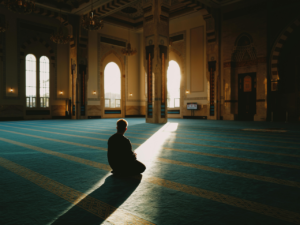
Bilal Naeem – Hiba magazine team writer As I get into the last Ashra of Ramadan, an unease begins to take hold, what will be
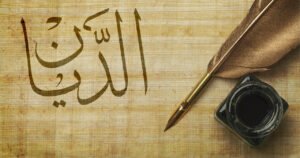
Ad Dayyaan is Allah’s (swt) beautiful name that has occurred in the Prophet’s (sa) Sunnah. It means that Allah (swt) is the Irresistible and All-Powerful Judge and Ruler who rewards or punishes people according to their deeds.
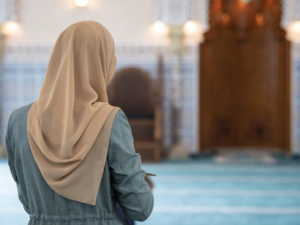
By Alia Moin (Certified Life Transition Coach, Hiba Team Writer) Ramadan brings with it a unique sacred energy. The Masaajid fill with light, and calm devotion. For many women, attending Taraweeh or Jummah prayers is not only an

War in Ramadan – Choosing Evil Over Good By Umm Amal – Hiba magazine Team Writer Ramadan is the epitome of mercy. The devils are chained, the doors

By Umm Amal – Hiba Magazine Team Writer Allah (swt) states in the Quran: “And [by] the soul and He Who proportioned it and inspired