By Alia Moin Adil
Certified life Coach, Hiba Magazine Team Member
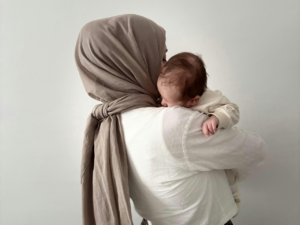
Single motherhood encompasses the different circumstances in which a mother carries the primary responsibility for raising her children without an active spouse sharing her day-to-day parenting role.
Single mothers are the nurturers as well as the providers. They do not only manage the household, rather they manage the whole system. Many face mental fatigue; financial pressures; emotional exhaustion; loneliness; loss of identity; lack of support; social judgement and stigma; guilt, whether they are enough for their children; fear, about the future; difficulty trusting again; rebuilding confidence; dealing with children’s emotional reactions; managing their children’s relationship with their father; re-entering social or/and professional life etc. The experience differs depending on the circumstances, resources, family support and the age of the children.
They carry a lot. And it can be overwhelming at times. However, this is not about portraying a single mother as a “woman to pity”.
Islamic history gives us women who experienced extraordinary circumstances while remaining capable, dignified and spiritually strong. Some of the greatest people of our Islamic legacy actually came from the foundation of single motherhood. A few noteworthy examples:
Maryam (as) – mother of Isa (as)
Maryam (as) is one of the most powerful Quranic examples. She became pregnant miraculously, without a husband, and faced pregnancy, childbirth and motherhood utterly alone.
The Quran describes her withdrawing from her people, experiencing the pains of childbirth, and then returning to them carrying, her son, Isa (as).
When she was alone, experiencing the pains of childbirth, Allah (swt) instructed her: “And shake toward you the trunk of the palm tree…” (Maryam,19:25)
The purpose was not to overwhelm Maryam (as). Rather, Allah’s (swt) message to Maryam (as) was to do her part by taking whatever small steps she can take, and then rely on divine support for the rest.
She did not have a husband to provide for her or shield her from the bitter gossip of the community. She was alone. Yet, it was Allah (swt) who defended her honour. Remember that your isolation is not a sign of Allah (swt) abandoning you.
Her story is therefore particularly meaningful when discussing stigma, motherhood, social judgment and finding one’s identity through faith rather than through people’s opinions.
The mother of Imam al-Bukhari
Her husband passed away when her son, Muhammad al Bukhari, was an infant. Consequently, she raised him and his brother as a widow.
Traditional sources relate that he became blind as a child. Medical experts did not have a cure to his blindness. His mother became deeply distressed yet; she did not despair, and supplicated to Allah (swt) for his healing.
The account says that she saw Prophet Ibrahim (as) in a dream who told her that Allah (swt) has answered her prayers and restored her son’s sight due to her frequency in prayer.
This reflects her resilience, persistence, prayer, connection to Allah (swt) – and the power of earnest Duas at Tahajjud.
As he grew older, she supported his pursuit of knowledge. He travelled extensively in search of Hadith and became one of the greatest scholars of Islam, authoring Sahih al-Bukhari.
Her story tells us that raising a child alone does not mean raising a child without hope. She could not control the circumstances of her widowhood, but she could invest in her children’s character and education. A single mother can be a builder and not merely a survivor.
Hajar (as) – mother of Ismail (as)
Hajar (as) is another extraordinary example. Ibrahim (as) left Hajar (as) and their infant son Ismail (as) in the barren valley of Makkah by Allah’s (swt) command. The famous account in Sahih al-Bukhari describes her asking Ibrahim (as) where he was leaving them and upon understanding that this was Allah’s (swt) command, she wholeheartedly submitted.
Suddenly she was responsible for the survival of her infant in an apparently impossible environment. She ran between Safa and Marwah searching for help, until Allah (swt) brought forth the spring of Zamzam.
Her running in desperation between Safa and Marwa became an act of worship repeated by millions of Muslims. A mother’s struggle became part of sacred history.
Her story is particularly powerful because Islam literally preserves a mother’s desperate search for her child’s survival as part of the rites of Hajj and Umrah.
Hajar (as) can therefore represent:
- resilience in motherhood
- doing what is within one’s control
- trusting Allah (swt) while taking action
- maternal courage
- perseverance during uncertainty
- finding strength when there appears to be no support
The mother of Musa (as)
The Quran does not give her name, but her story is profoundly moving. When Firawn’s regime threatened the lives of newborn Israelite boys, Allah (swt) inspired Musa’s (as) mother: “Nurse him, and when you fear for him, cast him into the river…” (Al Qasas, 28:7)
Imagine the psychological anguish of a mother being instructed to place her baby in a river in order to save him. She experienced enormous emotional distress of separation from her child. Allah (swt) describes her state: “The heart of Musa’s mother became empty…” (Al Qasas, 28:10)
She did that which was in her control – she sent her daughter to follow the basket from a distance to see where it would go and thus ensure Musa’s (as) safety. Eventually, Allah (swt) returned Musa (as) to her.
Her story is particularly relevant to mothers experiencing separation, loss, uncertainty and fear for their children.
Umm Salamah (rta)
Umm Salamah (rta) is a very important historical example of a widowed mother.
She and her husband, Abu Salamah (rta) shared a strong bond and faced intense hardships together as early Muslims.
Abu Salamah (rta) died after suffering injuries sustained in the Battle of Uhud. Umm Salamah (rta) mourned his death with profound sorrow. She wondered how anyone can be better than him. Subsequently, she married the Prophet ﷺ.
Her story is especially significant because she was not merely a mother – she became one of the most respected women of the early Muslim community and an important transmitter of knowledge.
Her life demonstrates that widowhood did not define the limits of her identity or future.
Asma bint Umays (rta)
Asma bint Umays (rta) is another fascinating example. She was married to Jafar ibn Abi Talib (rta) and had children with him. Asma (rta) became a widow when Jafar (rta) was martyred at the Battle of Mutah.
She later married Abu Bakr (rta) and, after his death, Ali ibn Abi Talib (rta). Her life therefore included widowhood, motherhood, remarriage and rebuilding family life after repeated losses.
She is particularly relevant to conversations about starting again after bereavement.
Motherhood in Islamic history was not always accompanied by security, partnership or ease. Yet their circumstances did not prevent them from becoming women of immense spiritual and historical significance. They serve as role models from surviving alone to rebuilding a supported, meaningful and purposeful life.
These stories can help shift the narrative from:
“My life is ruined because I am alone.”
Towards:
“My circumstances have changed, but Allah has not removed my capacity for purpose, growth, contribution and a meaningful future.”
Instead of asking:
“How do I get my old life back?”
Ask:
“What could my next chapter look like?”
Post Views: 9
![[Badge] Be Patient like Ayub (AS)](https://hibamagazine.com/wp-content/uploads/2018/12/WhatsApp-Image-2023-02-14-at-11.15.19-AM-300x300.jpeg)